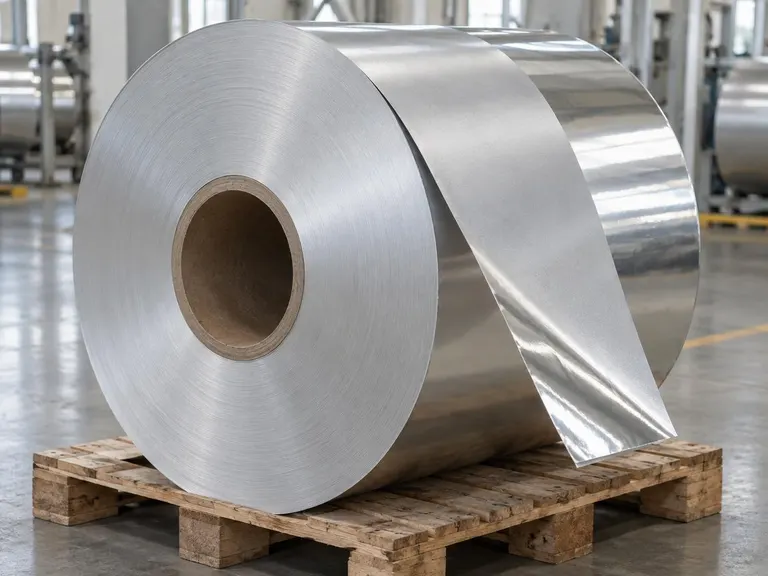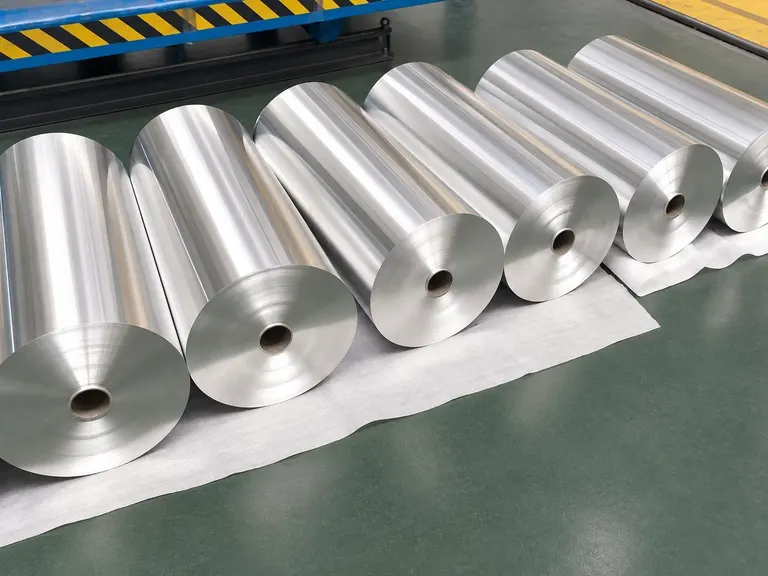
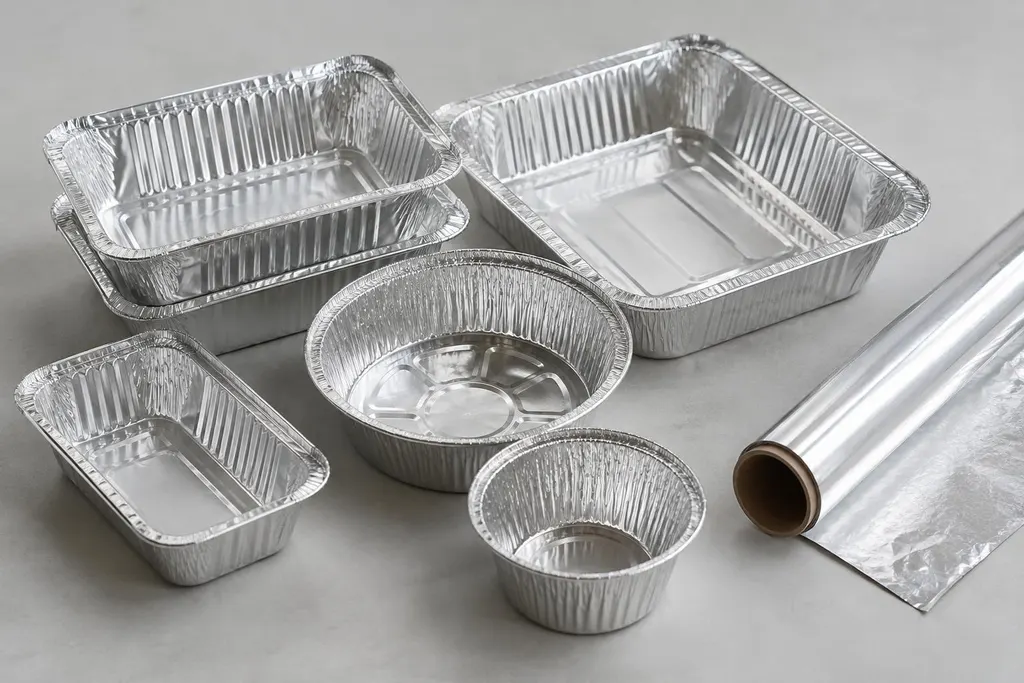
We roll both ends of that range: foil thin enough to laminate and seal, and foil heavy enough to be pressed into a tray that holds a hot meal.
Why Aluminium Works Here
Shelf life is the whole argument. Every other property of the packaging is negotiable; the barrier is not.
- Complete barrier to light, oxygen and moisture even at a hundredth of a millimetre.
- Takes food contact without imparting taste or odour.
- Forms into a tray that goes from freezer to oven without a change of packaging.
- Recyclable without loss of properties, unlike most multi-layer plastics.
What We Supply
| Product | How it is used here |
|---|---|
| Container foil | Pressed into takeaway trays, bakery containers and catering casseroles. |
| Food packaging foil | Lidding, laminating and wrapping stock for packaging lines. |
| Mill finish coil | Closures, caps and formed packaging components. |
| Aluminium strip | Narrow stock for sealing and closure applications. |
Specification Notes
- Container foil is specified by forming behaviour first; gauge alone will not tell you if it draws.
- Lidding stock is specified with the sealing layer and the tray material together.
- Ask for the food contact documentation you need for your own compliance file up front.
- Width should match the tooling on your press or packaging line, not a stock width.
Ordering Information
Tell us what the part has to do and we will tell you which of our products fits, or say that none of them does. Standard specifications start at 1 MT; material made to your own drawing starts at 6 MT. Alloy, temper, thickness, width, coil inner diameter and quantity are what we need to quote a specific price rather than a range.