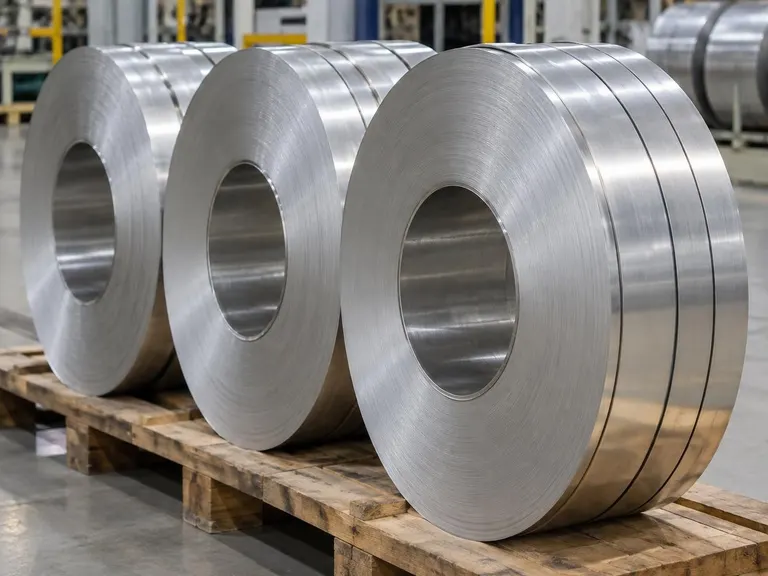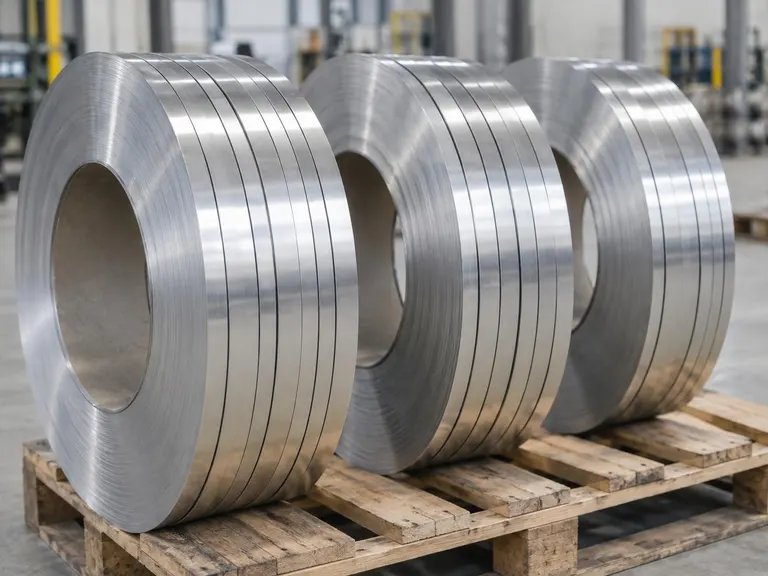
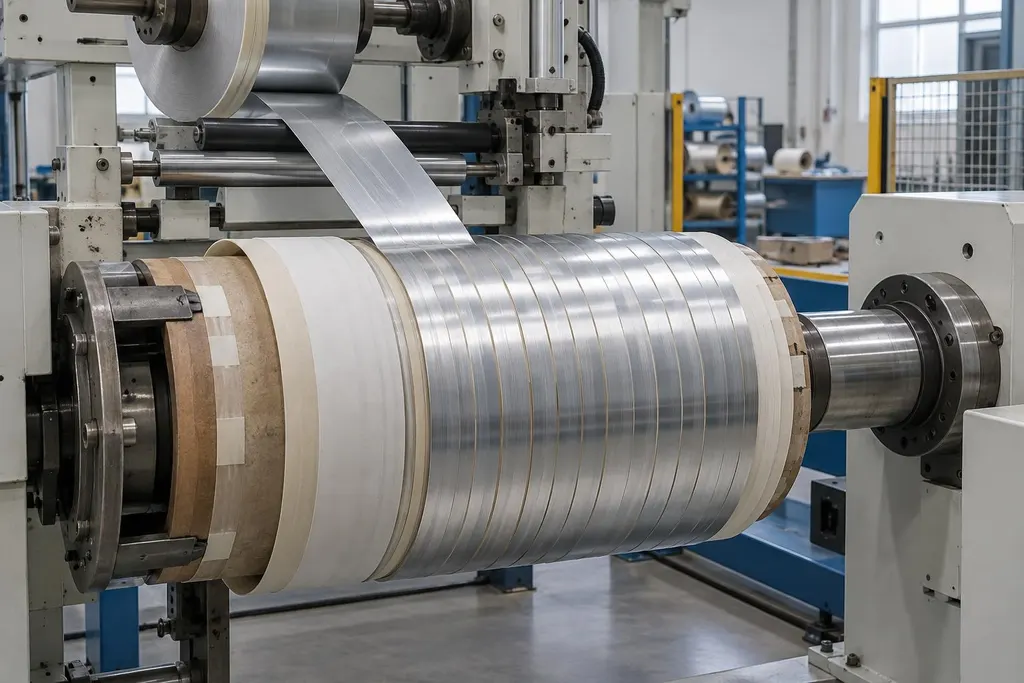
What this sector buys is consistency: gauge along the length, clean slit edges and coils wound to run.
Why Aluminium Works Here
Aluminium windings and sheaths trade a little conductivity for a lot of weight and cost, which is why distribution transformers and power cable have used them for decades.
- Conductivity per unit weight is better than copper, so the winding gets lighter.
- Strip form gives an even winding without the gaps that round wire leaves.
- Ductile enough to corrugate and wrap tightly around a cable core.
- Cost is stable relative to copper, which matters on long production runs.
What We Supply
| Product | How it is used here |
|---|---|
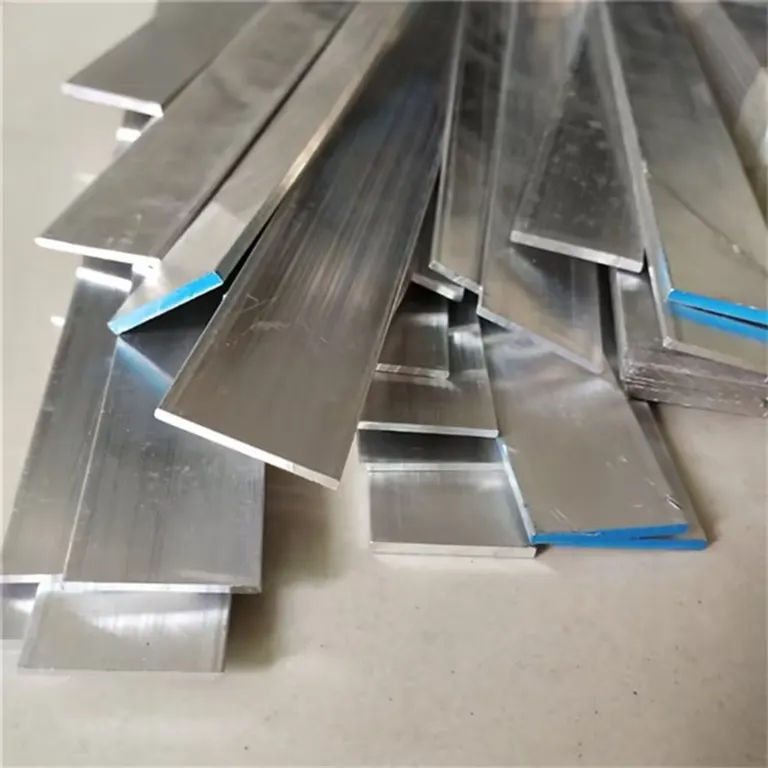
| Cable aluminium strip | Armour, shield and corrugated sheath layers on cabling lines. |
| Aluminium strip | Foil windings for distribution transformers and reactors. |
| Mill finish coil | Enclosures, tank panels and cable tray components. |
| Aluminium foil | Thin shielding layers in communication cable. |
Specification Notes
- Edge condition is part of the specification here, not an afterthought.
- State the maximum acceptable joint count per coil when you enquire.
- Winding tension and coil inner diameter should be confirmed against your machine.
- Surface cleanliness affects insulation adhesion in foil windings.
Ordering Information
Tell us what the part has to do and we will tell you which of our products fits, or say that none of them does. Standard specifications start at 1 MT; material made to your own drawing starts at 6 MT. Alloy, temper, thickness, width, coil inner diameter and quantity are what we need to quote a specific price rather than a range.