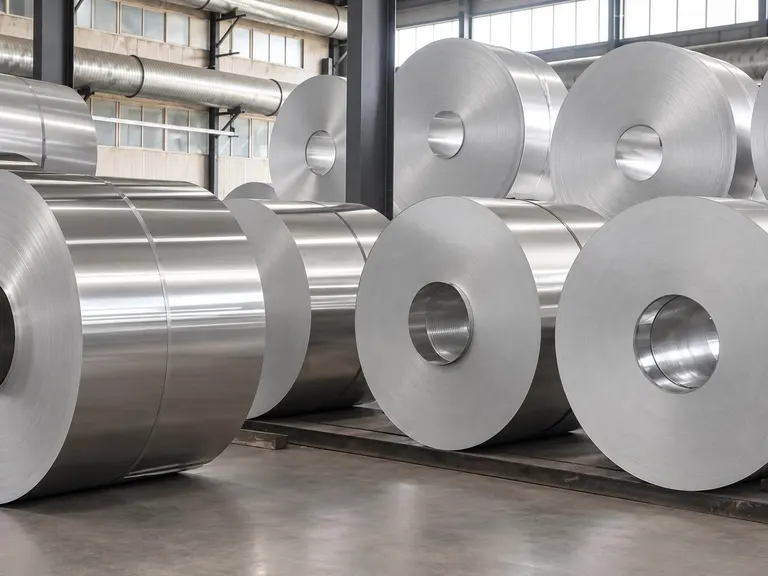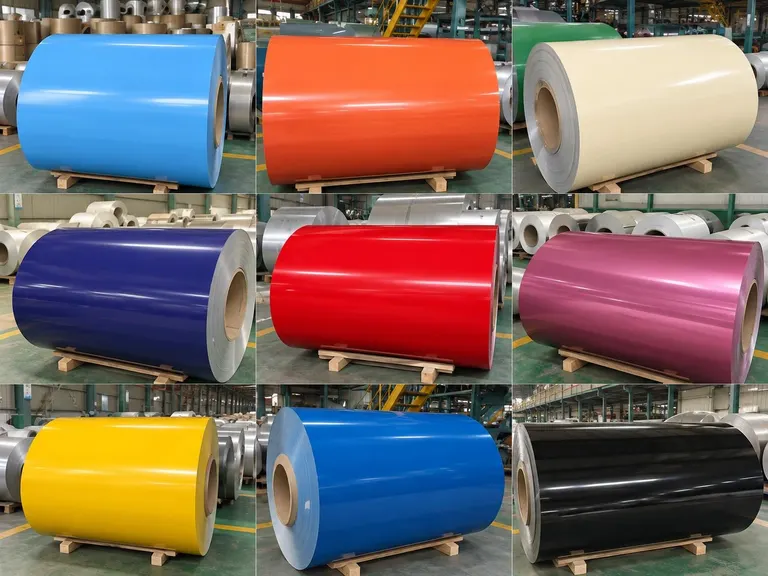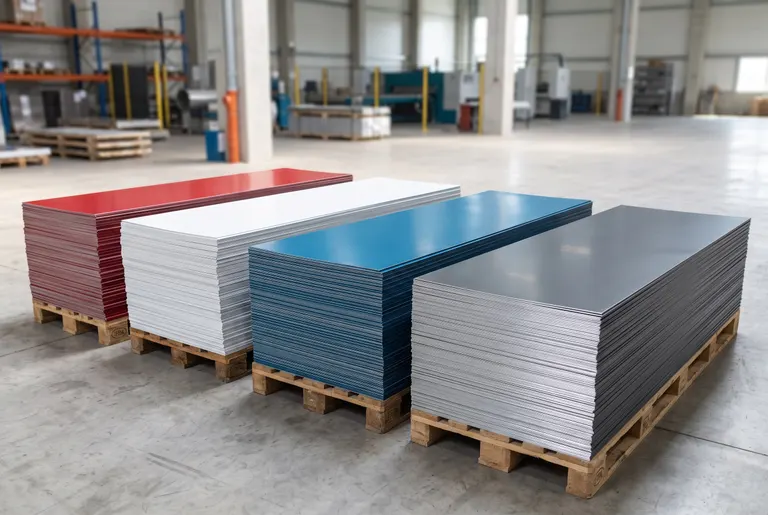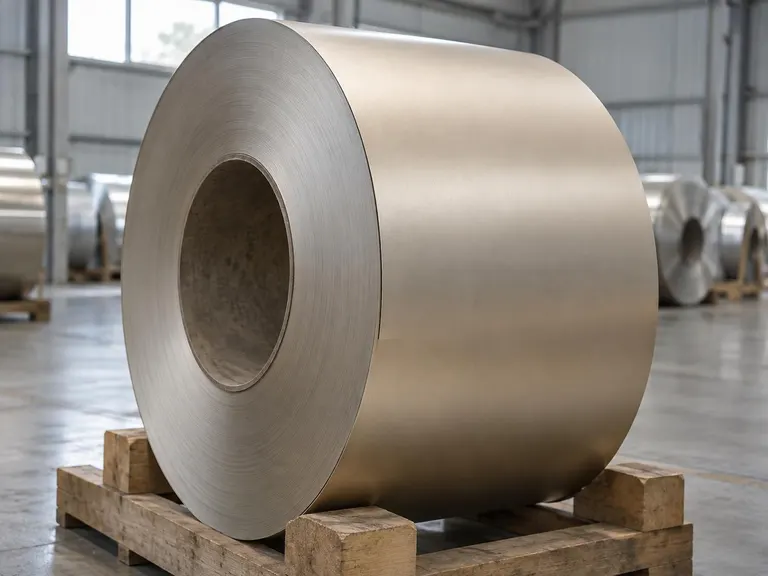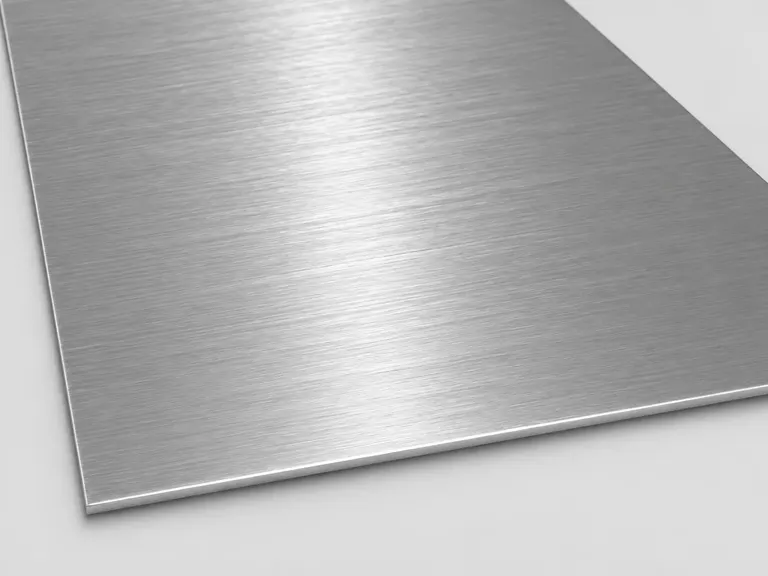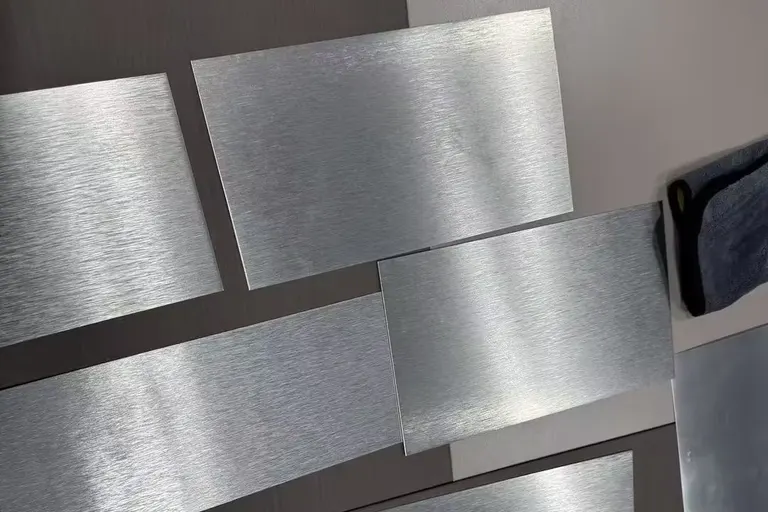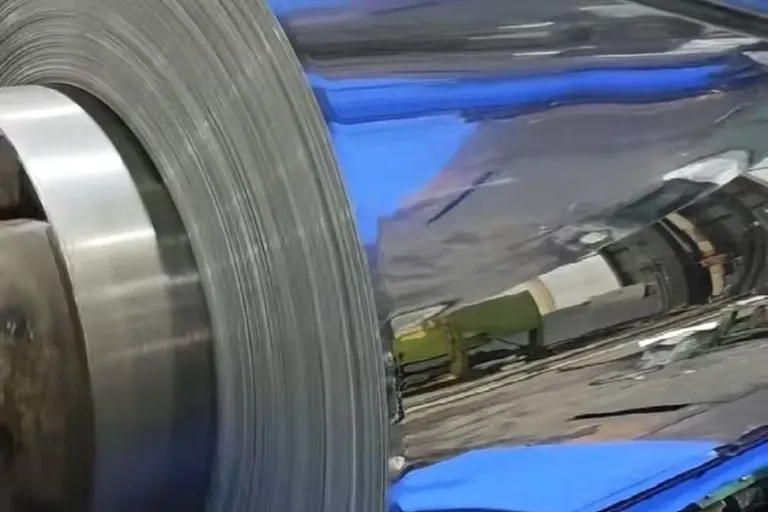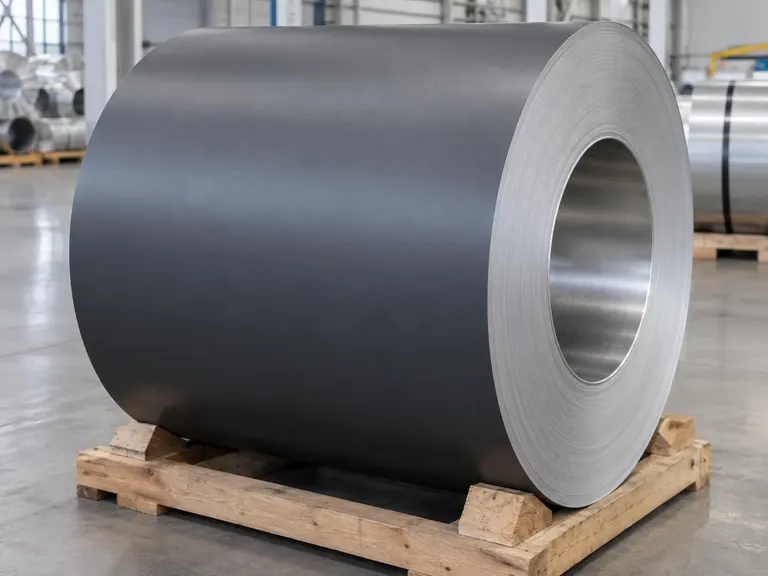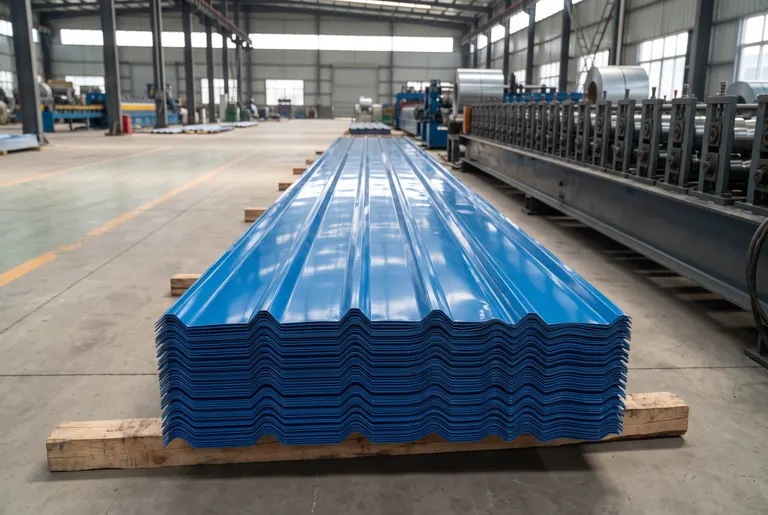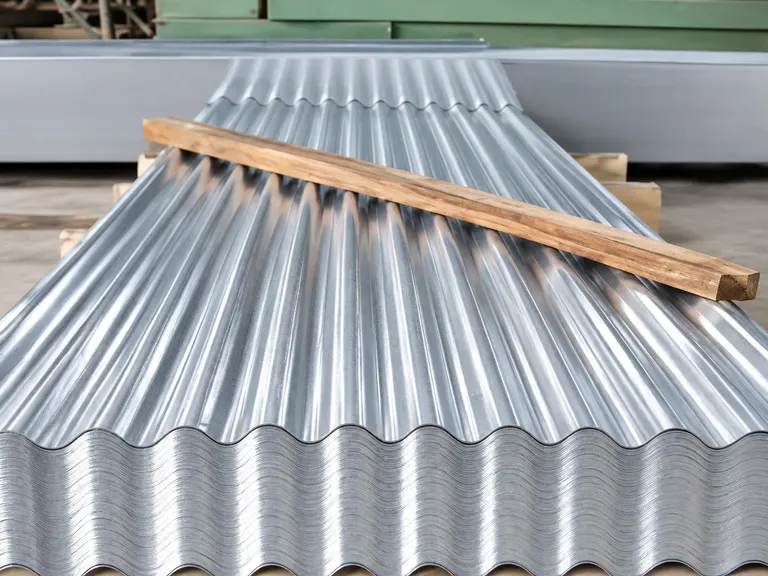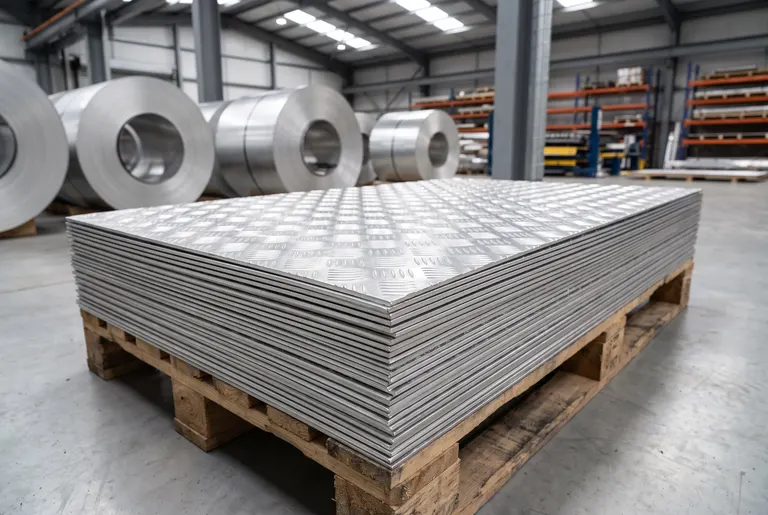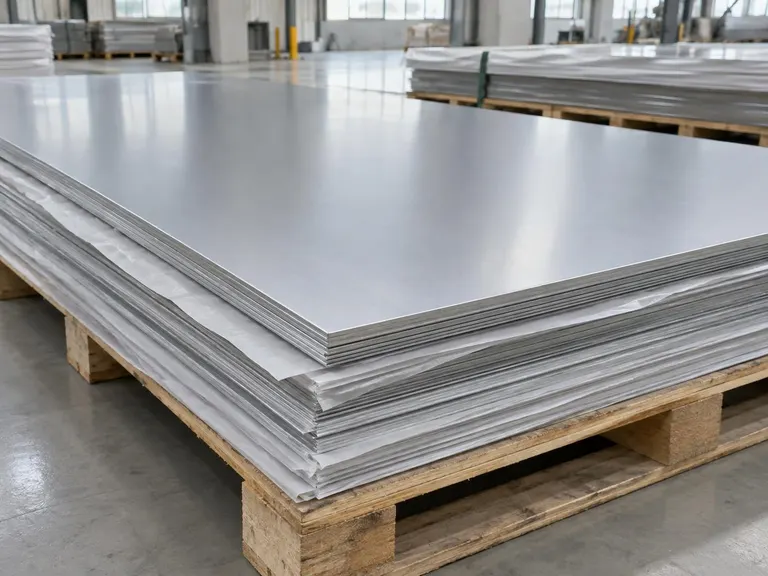
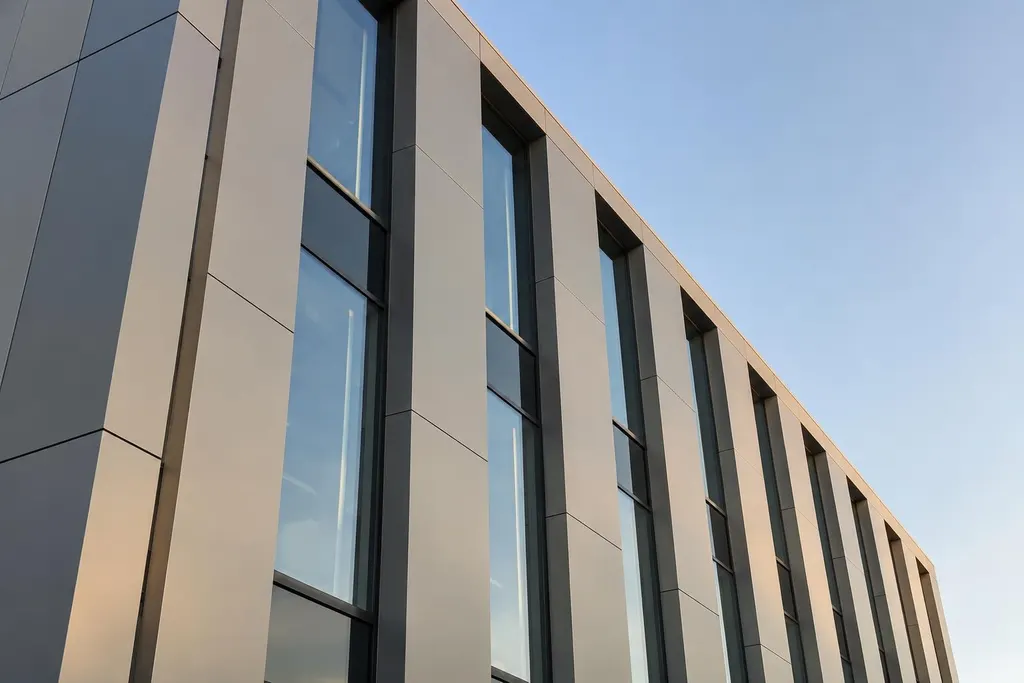
Our coating, anodising and rolling lines feed this sector directly. The fabricator folds the tray, bonds the stiffener and hangs the unit; we supply material that is still flat and still one colour when they get there.
Why Aluminium Works Here
Aluminium is the default facade material because of what it does not do: it does not rust, it does not need a heavy structure to carry it, and it does not have to come down when the building is refurbished.
- Weighs about a third of steel, so the supporting structure gets lighter and cheaper.
- Corrodes into a stable oxide instead of rusting through.
- Takes coating and anodising to a finish that lasts decades outdoors.
- Retains scrap value at end of life, which matters in building material declarations.
What We Supply
| Product | How it is used here |
|---|---|
| Colour coated coil | Painted facade panels, ceilings and sheeting, matched to a RAL reference. |
| Curtain wall sheet | Flat stock for folded tray panels and rainscreen cassettes. |
| Anodised coil and sheet | Panels where the finish has to be metallic rather than painted. |
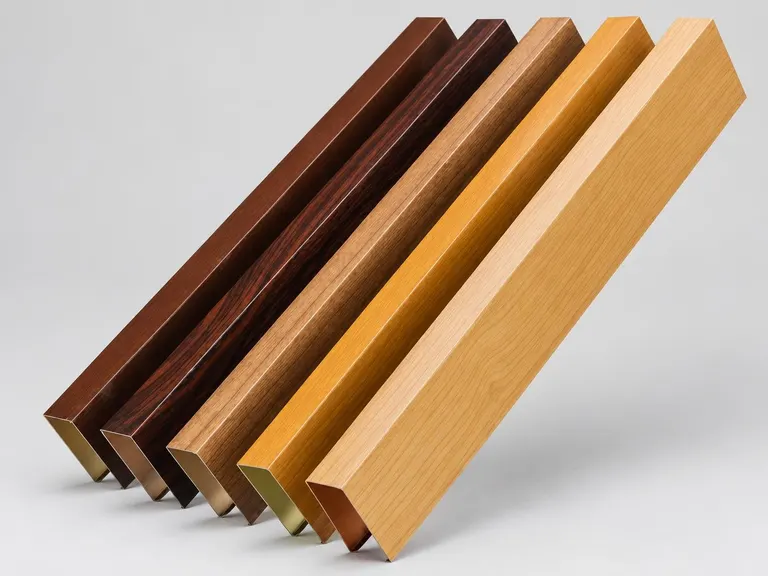
| Square tube stock | Strip for ceiling baffles, grids and decorative screens. |
Specification Notes
- Flatness matters more than the datasheet suggests once the panel is larger than a metre.
- Colour is matched by RAL reference, and repeat orders are matched to the original batch.
- PVDF outlasts polyester outdoors; polyester is the sensible choice inside.
- Anodised and coated surfaces age differently, so do not mix them on one elevation.
Ordering Information
Tell us what the part has to do and we will tell you which of our products fits, or say that none of them does. Standard specifications start at 1 MT; material made to your own drawing starts at 6 MT. Alloy, temper, thickness, width, coil inner diameter and quantity are what we need to quote a specific price rather than a range.